

Casting the future of high-performance materials
Returning to our roots, our lab has developed an innovative approach for treating light-alloy melts using a sonic ladle, as described in patent EP4212264A1, filed by Prof. Hélder Puga. This technology establishes a true symbiosis between the process and the device, enabling ultrasonic treatment and the right-after transfer of molten metal.
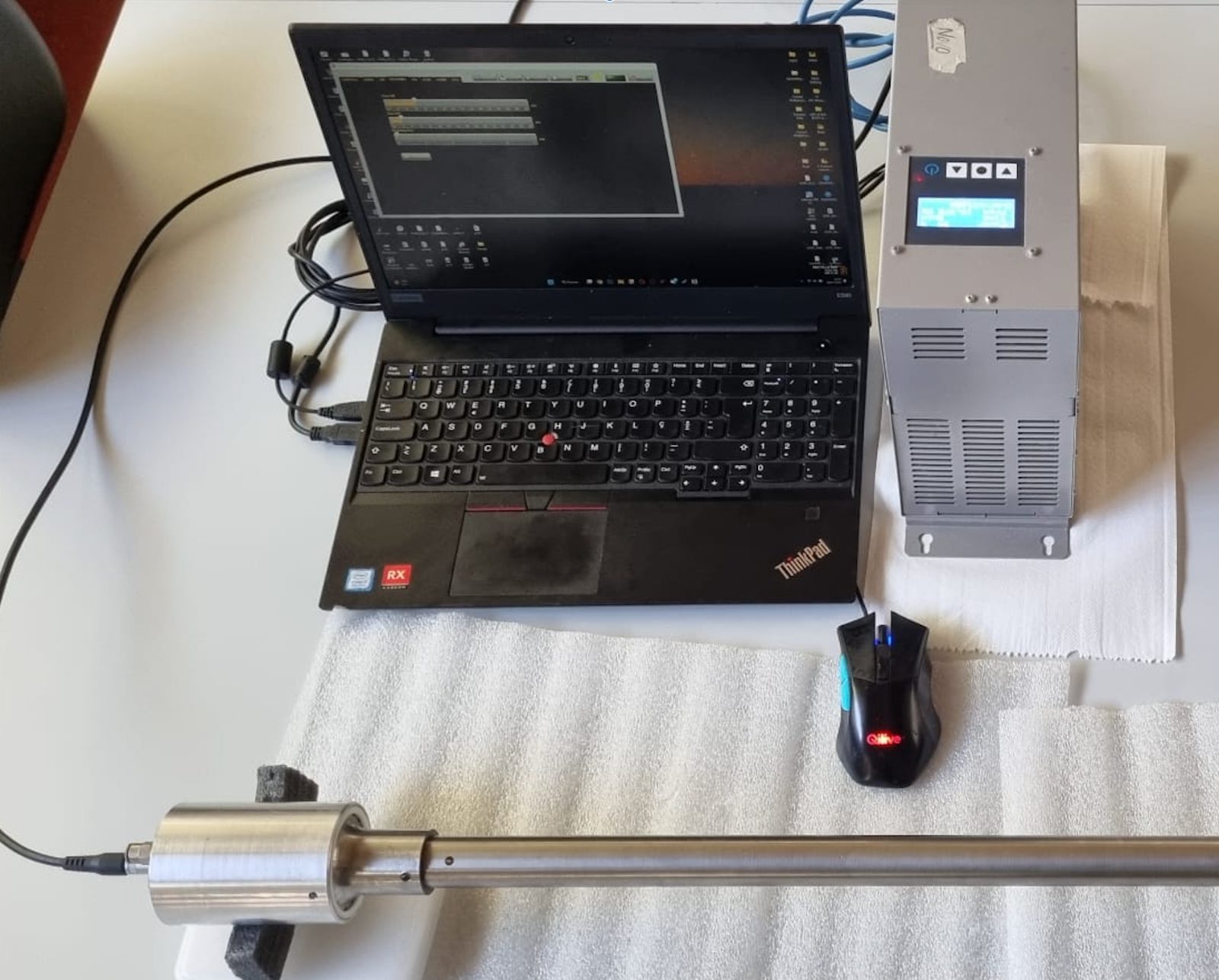
The system consists of an ultrasonic ladle designed for transferring molten metal from the furnace to the mould cavity. The ladle integrates an ultrasonic transducer capable of generating high-frequency vibrations that induce cavitation within the molten metal, as well as a waveguide that efficiently transmits these vibrations from the transducer to the ladle body. This integrated design enables continuous ultrasonic action throughout the entire molten metal transfer and handling process.
By coupling ultrasonic treatment directly with melt transfer, this approach overcomes the main limitations of conventional immersed ultrasound techniques, particularly the loss of effectiveness due to delays between treatment and casting. Such delays often lead to the disappearance of cavitation-induced nuclei, which are essential for heterogeneous nucleation and subsequent grain refinement.
In contrast, the sonic ladle maximizes cavitation by allowing casting immediately after melt treatment, ensuring nucleus survival and enabling consistent microstructural refinement. This advancement represents a significant step forward in the processing of high-performance light alloys, which exhibit substantial improvements in mechanical properties and reduced porosity.
Author

UM Technology